

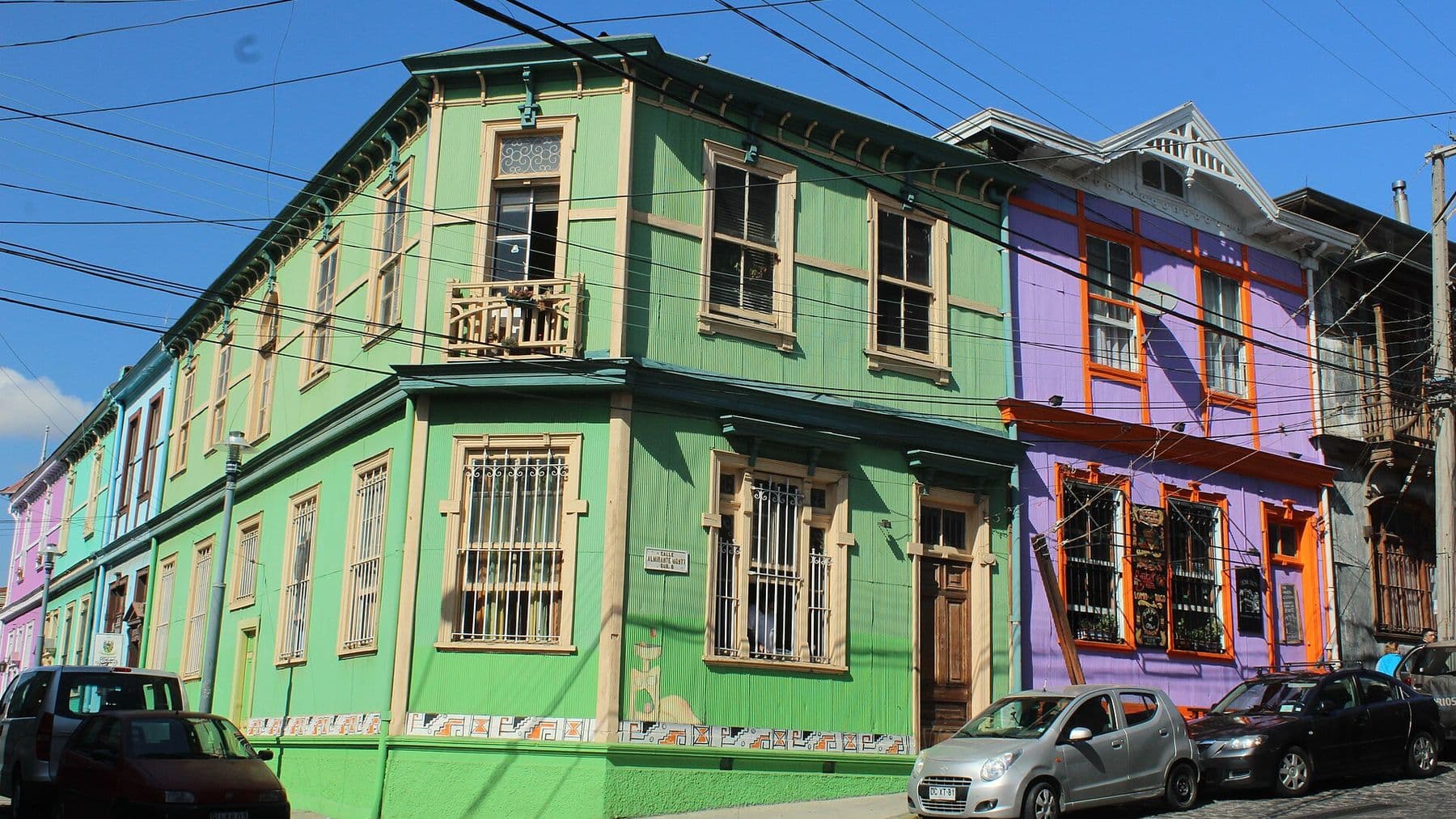
What Valparaíso is, in one line
A port built on hills, with coloured houses stacked on top of each other and murals on nearly every wall. Its historic quarter is a Unesco World Heritage site, and you see it on foot, climbing stairs.
Next door, twenty minutes away, is Viña del Mar: flat, orderly, with a beach and gardens. The two are visited on the same day precisely because they are opposites.
What you actually see
In Valparaíso: Cerro Alegre, Plaza Sotomayor, Plaza Atkinson, the Painted Staircase, the Piano Staircase, the port and the National Congress. In Viña del Mar: the Flower Clock, the Fonck Museum and the beach.
On the way there is a stop for a wine tasting at Rio Tinto. The harbour boat ride and the funicular are optional and paid there; neither is essential, but the boat is the only way to see the port from the water.
The awkward part: it is a whole day
Departure is at 6am and the tour runs about ten hours door to door. This is not a half-morning outing: it takes the entire day and nothing else fits around it.
And there is walking. Valparaíso is hills: the stairs and the climbs are the route, not a detail. With limited mobility, it is not the best tour in the catalogue.
When it is NOT worth it
If you are going for the beach. In winter the Chilean Pacific is cold even on a sunny day, and the coast is windier than Santiago. Viña’s beach is for looking at, walking along and photographing; not for swimming.
If you only have three days and one is a snow day. Then the coast day competes with the winery day, and a winery is an hour from Santiago rather than a whole day away.
So, yes or no?
Yes, if you like cities with character, photography, street art and walking. Valparaíso looks like nowhere else in Chile and it is the most distinctive thing you will see on the trip.
The alternative, if you want coast with less city, is Isla Negra: Pablo Neruda’s house facing the sea, with a stop in Algarrobo and a winery on the way back. Same full day, a different kind of day.
The tours in this guide
Keep reading
Farellones, El Colorado, La Parva or Valle Nevado?
All four sit on the same road, one above the other. Here is the real difference between them.
When is there actually snow in Chile?
The season runs June to September. But altitude matters more than the month, and that changes how you plan the trip.
What a day in the snow in Chile really costs
The tour is one part of the spend. Here is every line item, so none of them surprises you up there.
How many days do I need in Santiago?
Three cover the essentials and five let you breathe. But what shapes the itinerary is not the number of days: it is which days of the week.
What documents do I need to enter Chile?
Brazilians need no tourist visa. What does need checking before you leave home is something else.
How much money to bring to Chile, and how to pay
What takes a card, what needs cash, and the costs that appear up the mountain that nobody warns you about.
Is renting a car in Chile worth it?
For the coast and the wineries, yes. For driving up to the ski resorts in winter, no — and not because we sell tours.
What to pack for the Chilean winter
There are 16 degrees between Santiago and Valle Nevado. That, not the forecast, is what decides your suitcase.
Chile with children: which tour works at which age
Five of our tours do not admit under-18s and three more have a minimum age. Better to know now than at the door.
Which neighbourhood to stay in in Santiago?
It depends what kind of trip it is. And on one practical detail: where we can pick you up at five in the morning.
SIM cards, internet and phones in Chile
Three options and all of them work. What is worth knowing is where there is no signal — which is where you will want it.
Is Santiago safe for a tourist?
It is a big capital and behaves like one. What helps is not a yes or a no, but knowing where you are and at what hour.
When is the best time to travel to Chile?
It depends what trip you want. Nine of our 25 tours are winter-only; the other sixteen run all year.