

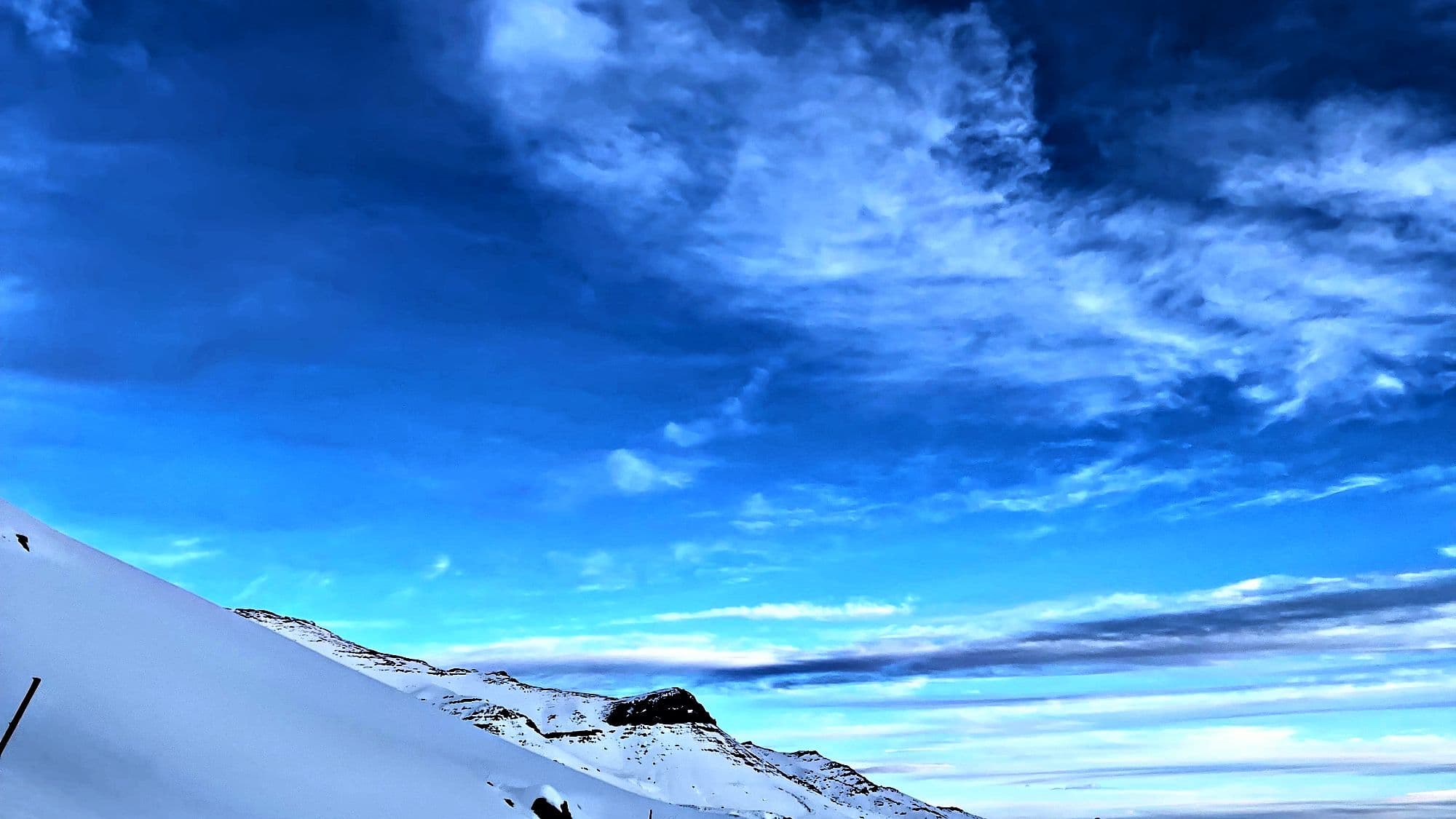
For the snow: no
The road to the ski resorts is route G-21, and in winter the authorities require snow chains. That is not advice: there are checks on the road, and without chains you get turned back even on a clear day in a new car.
Standard rentals do not include chains, and even if you find some, fitting them on a snowy slope at zero degrees having never done it before is not the memory you came for.
And if the road closes anyway
The route can close after snowfall. When it does, the rental still costs the same and the whole day is gone: there is nobody to claim from and nobody reschedules anything for you.
That is the practical difference with a tour: if the road closes you get your money back or move the date. The agency carries the risk, not you.
The 40 hairpins, counted
Between Santiago and Farellones there are about 31 kilometres of climbing with roughly 40 tight hairpin bends, continuing to km 46 if you go to Valle Nevado. It is narrow, two-way, with a drop on one side.
It is drivable — people do it every day. But it is demanding driving, and doing it at five in the morning on your first day in Chile in an unfamiliar car is starting the trip tired.
For the coast and the wineries: it works
Valparaíso, Viña del Mar, Isla Negra and the Maipo Valley wineries are reached on good motorways with tolls and clear signage. There a car gives you real freedom and pays off with four or more people.
Two honest warnings: parking in Valparaíso is painful, and at a winery somebody has to stay sober. That last part is exactly what a tour solves.
The short answer
If your trip is city, coast and wine, and there are several of you, rent. If it includes the mountains, go up with someone who drives that road daily and keeps chains in the boot.
You can mix: a car on the coast days, a tour on the snow day. That is what people who have been once already do.
The tours in this guide
Keep reading
Farellones, El Colorado, La Parva or Valle Nevado?
All four sit on the same road, one above the other. Here is the real difference between them.
When is there actually snow in Chile?
The season runs June to September. But altitude matters more than the month, and that changes how you plan the trip.
What a day in the snow in Chile really costs
The tour is one part of the spend. Here is every line item, so none of them surprises you up there.
How many days do I need in Santiago?
Three cover the essentials and five let you breathe. But what shapes the itinerary is not the number of days: it is which days of the week.
Is Valparaíso worth it in winter?
Yes, if you are going for the hills and the street art. No, if you are going for the beach. It is a full day, and it helps to know what for.
What documents do I need to enter Chile?
Brazilians need no tourist visa. What does need checking before you leave home is something else.
How much money to bring to Chile, and how to pay
What takes a card, what needs cash, and the costs that appear up the mountain that nobody warns you about.
What to pack for the Chilean winter
There are 16 degrees between Santiago and Valle Nevado. That, not the forecast, is what decides your suitcase.
Chile with children: which tour works at which age
Five of our tours do not admit under-18s and three more have a minimum age. Better to know now than at the door.
Which neighbourhood to stay in in Santiago?
It depends what kind of trip it is. And on one practical detail: where we can pick you up at five in the morning.
SIM cards, internet and phones in Chile
Three options and all of them work. What is worth knowing is where there is no signal — which is where you will want it.
Is Santiago safe for a tourist?
It is a big capital and behaves like one. What helps is not a yes or a no, but knowing where you are and at what hour.
When is the best time to travel to Chile?
It depends what trip you want. Nine of our 25 tours are winter-only; the other sixteen run all year.